
Bioreactor
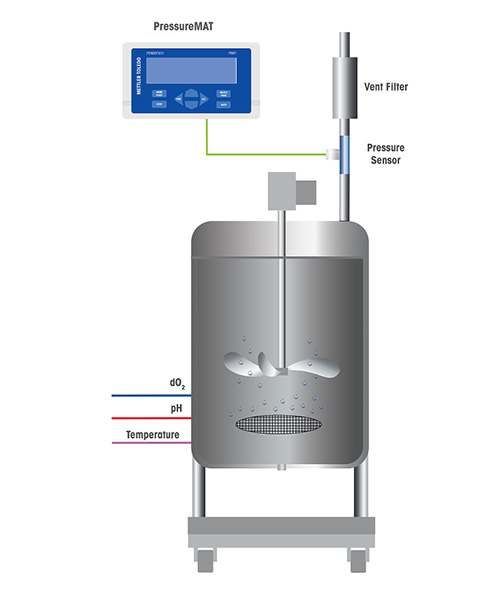
Overview and Importance
The bioreactor is the core of upstream production, where cells are cultivated under controlled conditions to express the target biologic. Tight control of culture parameters preserves cell health and productivity and sets the stage for efficient downstream processing. Poor bioreactor control increases impurity burden, reduces titer, and makes clarification and purification less predictable.
- Regulatory Alignment
- Key Process Parameters and Challenges
- In-Line/On-Line Monitoring and Benefits
- Summary Table
Upstream culture should align with ICH Q8 for process design and ICH Q9 for risk management, while EU GMP Annex 2 provides expectations for biological manufacturing. In-line pH, dissolved oxygen (DO), temperature, and pressure monitoring demonstrate that critical process parameters remain within validated ranges, providing traceable evidence of control before harvest. Regulatory compliance can be shown by comparing viable cell density and product titer trends across multiple batches, ensuring process consistency and verifying that upstream yield meets validated performance criteria.
Key Parameters:
- pH – Maintains metabolic balance and product quality.
- Dissolved Oxygen (DO) – Supports cell growth and productivity.
- Temperature – Controls metabolism and protein folding.
- Pressure – Ensures gas exchange and system integrity.
Challenges:
- pH drift due to CO₂ stripping can reduce productivity or drive the formation of product variants.
- DO fluctuations from sparger or agitation changes can stress cells, lowering viable cell density and yield.
- Temperature excursions may cause protein misfolding or degradation.
- Overpressure or vacuum loss can disrupt aeration and sterility.
Using single‑use pH, DO, temperature, and pressure sensors allows continuous feedback control of the culture. Real-time monitoring promotes cell health and productivity, minimizing batch-to-batch variability for subsequent processes and upstream control. Industry case studies demonstrate that real-time upstream monitoring improves yield consistency and reduces deviation-related losses, strengthening regulatory compliance and process efficiency.
| Parameter | Why It Matters | Monitoring Technology | Best Practice / Mitigation |
|---|---|---|---|
| pH | Maintains optimal metabolic activity and product quality | Maintains optimal metabolic activity and product quality | Calibrate and validate pH probes regularly; implement closed-loop control to correct drift in real-time. |
| Dissolved Oxygen (DO) | Supports cell growth and productivity | In-line DO sensor | Maintain DO via cascade control with gas mix adjustments; avoid sudden aeration changes. |
| Temperature | Controls metabolic rate and protein folding | In-line temperature probe | Use redundant temperature probes and alarms; pre-validate heating/cooling rates. |
| Pressure | Ensures efficient gas transfer and vessel integrity | In-line pressure sensor | Set and monitor pressure alarms; validate vent filter integrity to prevent contamination. |
Learn how METTLER TOLEDO Pendotech single-use pH, dissolved oxygen, temperature, and pressure sensors can help you maintain precise bioreactor control, maximize upstream yield, and ensure compliance-ready process data.
With upstream conditions tightly controlled, the clarified harvest can proceed into downstream processing with optimal quality and yield.

 © Copyright 2026 Pendotech